Criterion 2.3-11: Ensuring the safety of newborns at birth, a quality imperative
Criterion 2.3-11 is a key pillar for guaranteeing the safety and well-being of newborns from the very first moments of their lives. It sets out the requirements for healthcare teams to ensure optimal and continuous care, aiming to improve the health and quality of life of the infant.
What is Criterion 2.3-11 and why is it essential?
Criterion 2.3-11 is a key indicator for maternity units, considered an imperative.
Its main objective is to ensure the safety of newborn care at birth, which is directly linked to improving the newborn's health and well-being from the very first moments. This involves a series of standardized and systematic actions that healthcare teams must follow.
This criterion encompasses several fundamental aspects of initial newborn care, including:
- Immediate identification of the infant.
- Prevention of infections.
- Assessment of vital functions, often using the Apgar score.
In essence, it aims to structure practices so that every newborn benefits from a safe environment and appropriate care from birth, anticipating needs and potential risks.
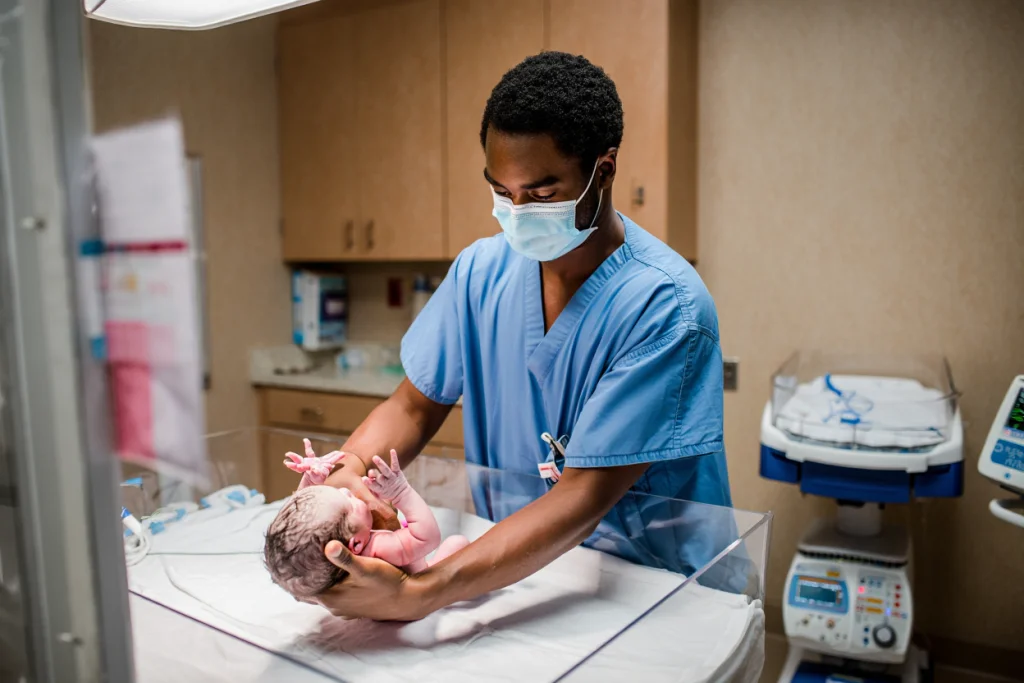
The foundations of securing: Continuous care and monitoring
To achieve the objectives of Criterion 2.3-11, particular attention is paid to continuous monitoring and the provision of essential care. Continuous monitoring allows for the rapid detection of any abnormality or complication that would require specialized care.
Essential care routinely provided includes:
- Maintaining body temperature. This is all the more crucial as the neonatal resuscitation protocol emphasizes temperature maintenance, particularly for premature infants where drying and swaddling, as well as the use of a plastic bag, are key measures. Professionals must also take the newborn's temperature upon discharge from the delivery unit and upon admission to the intensive care unit.
- Managing feeding, including breastfeeding support, which must be part of a formalized quality assurance process.
Furthermore, clear communication with parents is fundamental to ensuring a smooth transition and promoting attentive monitoring of the newborn's first moments of life. Specific actions such as delayed umbilical cord clamping and skin-to-skin contact are practices that professionals must document, explaining the reasons if they are not performed. These measures contribute to better adaptation to extrauterine life, which, in the majority of cases (85%), occurs naturally, but sometimes requires stimulation or, for 5% of infants, positive pressure ventilation. The pivotal role of healthcare professionals: Training and quality improvement. The success of Criterion 2.3-11 largely depends on the skills and commitment of healthcare professionals. It is imperative that all professionals caring for newborns in the birth and maternity ward receive simulation-based training from the start of their employment and throughout their professional practice. This training includes mastering care procedures, particularly regarding neonatal resuscitation and the management of neonatal infections. Newborn resuscitation is primarily respiratory, with only one in 1,000 newborns requiring chest compressions. To facilitate this adaptation, anticipating preparation, checking equipment, ensuring the availability of caregivers, and using checklists are essential to minimize stress and ensure readiness. Managing an emergency situation is a true team performance, requiring a clearly identified leader, good coordination of actions, and information sharing.
Furthermore, professionals are required to:
- Rigorous document delayed cord clamping, skin-to-skin contact, and the newborn's temperature in the patient's file.
- Participate in a formalized quality improvement process, for example, for breastfeeding support.
- Analyze their results and define continuous improvement measures, for example, regarding the rate of delayed cord clamping, antenatal corticosteroid therapy, or length of hospital stay.
This approach guarantees continuous improvement of practices and optimal safety of care provided to newborns.

Safeteam's P25 training: A concrete lever for Criterion 2.3-11
The "Strengthening your practices in case of neonatal resuscitation (P25)" training offered by Safeteam is directly aligned with the requirements of Criterion 2.3-11, in particular the requirement for professional training. This training is intended for a diverse audience, including childcare assistants, nurses, midwives, anesthesiologists/intensivists, and pediatricians working in the delivery room.
The main objective of the P25 training is to enable participants to manage a newborn in cardiac arrest according to the current international recommendations of the European Resuscitation Council (ERC). This is crucial since neonatal resuscitation is a skill that professionals must master under Criterion 2.3-11.
The training emphasizes:
- Mastering good resuscitation practices, such as the ABCDE algorithm (Airway, Breathing, Circulation, Drugs, Environment). This algorithm includes airway management, positive pressure ventilation (PPV), chest compressions, FiO2 augmentation, and tracheal intubation if necessary. Upper airway suctioning is also part of the clearance process and should be performed cautiously, never routinely. The Securing and ensuring reliable communication times, including alerts and handovers. The Reducing the risks associated with iatrogenic hypothermia. The teaching methodology is innovative, combining independent learning with group sessions via videoconference. It uses immersive video simulation to recreate the care provided to a newborn in cardiac arrest by a multidisciplinary team, followed by a video debriefing with field experts. This approach raises awareness of the importance of human factors and teamwork in emergency situations, providing concrete tools for immediate implementation. By regularly practicing as a team and using cognitive crisis management aids, professionals can significantly improve the quality of care, even under stress or fatigue.