Blended Learning in Healthcare: The Pedagogical Revolution for Patient Safety
In a constantly evolving healthcare sector, continuing professional development is more than a necessity; it is essential to guarantee patient safety and quality of care. Faced with the time, budget, and organizational constraints of healthcare and social care facilities, traditional training models are showing their limitations. This is where blended learning comes in, a hybrid pedagogical approach that combines the flexibility of e-learning with the impact of face-to-face training. This method is now emerging as the most relevant solution to meet the complex challenges of the healthcare world. At the heart of this revolution is SafeTeam Academy, the world's leading video-simulation training platform, which has made blended learning its driving force for sustainably transforming professional practices and strengthening the safety culture. Discover how this innovative approach can not only optimize your team's training, but also, and above all, save lives.
What is Blended Learning and why is it so popular?
Blended learning, or blended training, is not simply a combination of online courses and face-to-face sessions. It's an integrated pedagogical strategy designed to get the best out of each modality. On the one hand, e-learning offers unparalleled flexibility: learners can train at their own pace, wherever they want, on theoretical modules, case studies, or immersive simulations. On the other hand, face-to-face training capitalizes on human interaction: team debriefings, practical workshops, and sharing of experiences that ground learning in real-world situations.
In the healthcare sector, this duality is particularly powerful. Professionals must acquire advanced technical knowledge while developing crucial non-technical skills (or soft skills) such as communication, crisis leadership, situational awareness, and decision-making. Medical errors, often linked to human and organizational failures, are the third leading cause of death in developed countries. SafeTeam Academy was created with the mission of addressing this issue by providing training tools that specifically target these skills. Blended learning prepares the ground with immersive e-learning modules based on real-life cases, then consolidates this knowledge during in-person debriefing sessions, where collective intelligence can be fully expressed. This approach guarantees not only better information retention but also the concrete and rapid application of best practices on a daily basis.
SafeTeam Academy: The ideal partner for your Blended Learning strategy
SafeTeam Academy is not just a training provider; it is a strategic partner for healthcare institutions that want to engage their teams in a continuous improvement process. Drawing on unique expertise in human factors, pedagogy, and healthcare, the academy has developed a method that has already attracted more than 250 institutions and trained over 11,500 learners since 2021.
SafeTeam Academy's strength lies in its unique format: ultra-immersive video-simulation training. These videos, lasting a maximum of 15 minutes, immerse professionals in realistic crisis situations, inspired by true and anonymized stories shared on the Patient Safety Database platform. This realism is praised by experts, such as Dr. Philippe Cabarrot of the French National Authority for Health (HAS), who describes the training materials as being of "excellent quality," and Véronique Normier, a simulation trainer, who speaks of a "true revolution in training" with "realism so realistic you feel like you're really there!" These e-learning modules form the first building block of an effective blended learning program. They allow learners to familiarize themselves beforehand with safety tools, protocols, and soft skills, before meeting for a debriefing session led either by the institution's trainers or by experts from SafeTeam Academy. This flexible and customizable model adapts to all needs, whether it is to train an entire operating room, to deploy a new safety culture or to enhance existing full-scale simulation sessions. The organization is 100% Qualiopi certified, guaranteeing a rigorous methodology and a proven quality approach.
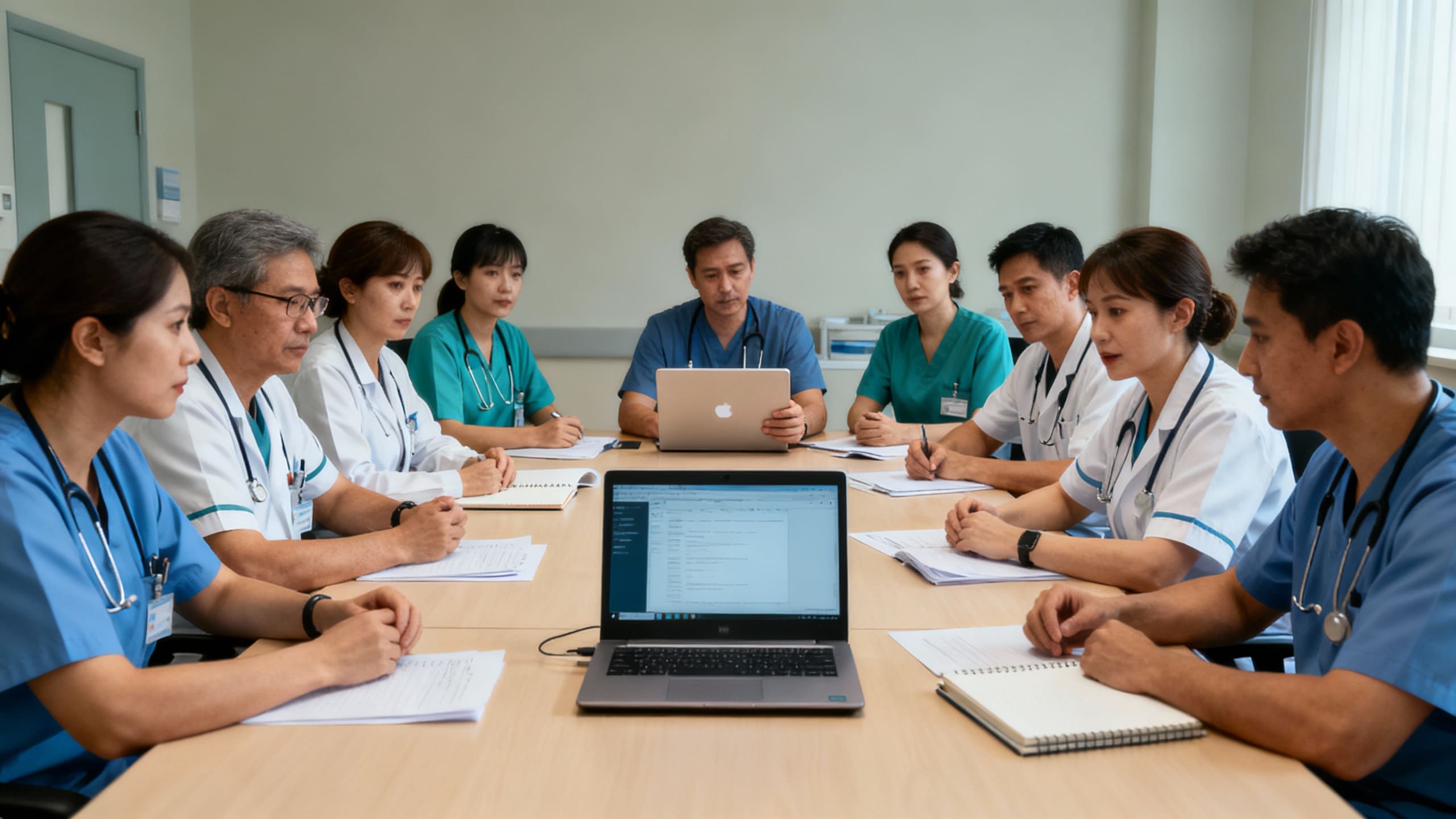
Developing non-technical skills (Soft Skills) through simulation
Mastering technical skills is no longer enough. Patient safety relies heavily on non-technical skills: teamwork, effective communication, leadership, and decision-making under pressure. These skills are at the heart of SafeTeam Academy's teaching methodology. Each video-simulation scenario is designed to challenge practices and routines and highlight the power of human factors in preventing, recovering from, and mitigating errors.
Our training programs target key skills:
- Teamwork and Communication: Learn to communicate effectively to ensure reliable care, whether in the operating room, during inter-departmental handovers, or in medical-surgical emergencies. Training courses like "Checklist & Teamwork in the Operating Room" are highly praised for their direct impact on team cohesion. Leadership in Emergency Situations: Developing a climate of trust to foster communication and rapid decision-making during a crisis, whether it involves cardiac arrest, postpartum hemorrhage, or a life-threatening emergency in the ward. Crisis Management and Situational Awareness: Our scenarios train teams to manage complex situations such as hemorrhage in robotic surgery, a patient who cannot be intubated or oxygenated, or septic shock. Safety Culture: Dedicated pathways strengthen the "just culture" and teach participants how to conduct lessons learned. Effective feedback (REX) and to conduct morbidity and mortality meetings (MMRs) to transform each incident into a collective learning opportunity.
By combining these e-learning simulations with in-person debriefings, blended learning makes it possible to move from individual awareness to the development of concrete, collective action plans, uniting teams around a common goal: patient safety.
Hybrid training programs for all departments and professionals
SafeTeam Academy's approach is aimed at all healthcare professionals (doctors, surgeons, nursing assistants, nurses, nurse anesthetists, operating room nurses, etc.) and all types of facilities, whether acute care, rehabilitation, nursing homes, public organizations, or insurers. The catalogue, featuring over 50 courses, covers a wide range of specialties and issues. Whether you are in the operating room, the emergency room, intensive care, delivery room, radiology, or a medical/surgical department, there is a training course adapted to your needs. SafeTeam Academy offers training on topics as varied as:
- Improving the reliability of the HAS surgical checklist.
- Managing life-threatening emergencies and cardiac arrest, in the ward, during CT scans, or in the pre-hospital setting, with the expertise of the Paris Fire Brigade (BSPP).
- Preventing medication errors and ensuring secure communication.
- Obstetric emergencies such as postpartum hemorrhage or code red cesarean sections.
- Promoting respectful care and preventing elder abuse, with recognized experts.
- Managing aggression, patient identification vigilance, and preventing musculoskeletal disorders.
Each training program is customizable and can Include multiple roles (surgeon, anesthesiologist, nurse, etc.), allowing each team member to experience the simulation from their own perspective for maximum awareness. This modularity is key to a successful deployment of blended learning across an institution.
Case Studies: Blended Learning in Action with SafeTeam Academy
The best way to understand the impact of blended learning is to see how it has been successfully implemented. SafeTeam Academy has supported numerous institutions in transforming their practices.
Case study of the Sens Hospital Center: Uniting the operating room around safetyFaced with the need to strengthen the safety of perioperative care, the Sens Hospital Center opted for a blended learning continuing professional development (CPD) program.
- Step 1 (E-learning): All operating room professionals (anesthesiologists, surgeons, nurse anesthetists, scrub nurses) completed a 1-hour e-learning course on the SafeTeam Academy platform, focusing on teamwork, the HAS checklist, and managing task interruptions.
- Step 2 (In-person): A debriefing session was held in person. Led by experts from SafeTeam Academy, this day fostered rich and supportive exchanges. Teams formed working groups and developed concrete action plans on topics such as checklists and challenging behaviors. Result: An enthusiastic and cohesive team, concrete improvement plans proposed to management, and valuable data for the Quality department. A perfect illustration of the power of blended learning to transform individual awareness into collective momentum. Case study: Rouen University Hospital: Innovating by creating its own video simulation. Rouen University Hospital, an expert in robotic surgery, wanted to share its crisis management expertise. Since traditional simulations are not suitable for training large numbers of people, they collaborated with SafeTeam Academy.
- Project: Co-create a video-simulation training course on managing hemorrhage in robotic surgery.
- Process: The university hospital teams, supported by experts from SafeTeam Academy, wrote the scenario and were filmed during a simulation.
- Result: An ultra-immersive and reusable digital learning tool, enabling the training of hundreds of healthcare professionals and enriching the institution's training catalog. This partnership model demonstrates how blended learning can also be a tool for leveraging and disseminating internal expertise.
- Objective: To use SafeTeam Academy's e-learning platform for blended learning and to prepare learners before simulator sessions.
- Deployment: Trainers were given open access to the platform, allowing them to freely create e-learning sessions to introduce concepts such as cognitive aids and human factors.
- Result: More effective in-person simulation sessions, as learners arrive with a shared foundation of knowledge. Trainers can then focus on more advanced scenarios and test the new tools acquired by the teams. The post-e-learning session debriefing becomes a key moment for discussion and reflection on practices.
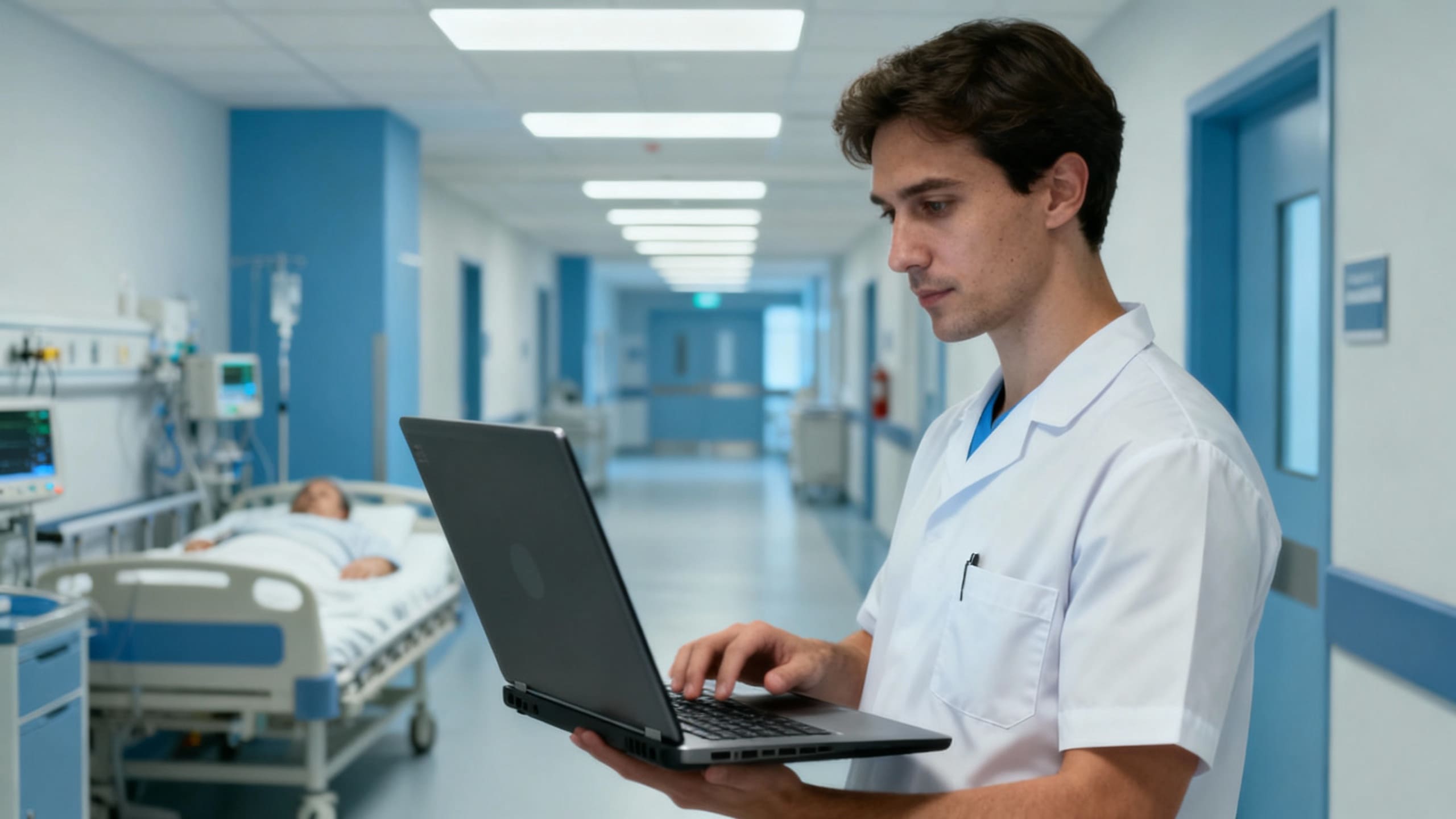
- How to set up blended learning with SafeTeam Academy?Launching a blended learning approach may seem complex, but SafeTeam Academy has designed a simple and supported process to guarantee the success of your project. Our teams are committed to assessing your needs and providing you with a response in less than 48 hours. The process generally unfolds in three clear steps, as illustrated in our client case studies: Needs Assessment: During an initial consultation, our training consultants will work with you to assess your objectives, target audiences, and priority topics. Whether you wish to implement a Continuing Professional Development (CPD) program, train new recruits, or strengthen your safety culture, we will define the most suitable learning path together. E-learning Deployment: Once the learning path is defined, deployment on the platform is quick and requires no installation costs for your organization. Each learner receives secure access and can follow the video-simulation modules at their own pace, over a given period.
- In-Person Session Organization: The e-learning phase concludes with one or more in-person debriefing sessions. These can be led by your own trainers (whom we can support) or by SafeTeam Academy experts, who come to your facility to facilitate discussions and help co-create action plans.
To meet different needs and budgets, SafeTeam Academy offers flexible options: from a "Movie Ticket" for single access to a thematic learning path (ideal for large-scale initiatives), to individual or shared "SafeFlix" licenses offering unlimited access to the catalog for one year. The shared license, with its reassignable access, is perfect for gradually training an entire institution.
The Future of Healthcare Training: Human and Technological
The health crisis accelerated the digitalization of training, but it also highlighted the crucial importance of human connection and teamwork. The future of healthcare training lies not in "all digital" or "all in-person," but in an intelligent synergy between the two. This is the promise of blended learning.
As Frédéric Martin, founder of SafeTeam Academy and anesthesiologist, points out, the goal is to "facilitate exchanges between professionals in order to improve teamwork for the benefit of patient safety." Technology, in this case video simulation, is not an end in itself. It's a powerful tool for "experiencing emotions, captivating, and training large groups," a catalyst that makes face-to-face interactions deeper and more impactful.
By investing in a blended learning strategy with SafeTeam Academy, you're not just investing in a training platform. You're investing in your human capital. You're empowering your teams to develop essential social and soft skills to ensure high-quality, safe, and humane care. You're uniting your professionals around a shared improvement project, strengthening cohesion, and developing a true learning organization.
Take action: revolutionize your team training
Medical errors are not inevitable. Solutions exist to enhance patient safety, and they involve innovative, engaging training adapted to real-world situations. Blended learning, as designed and deployed by SafeTeam Academy, represents the most comprehensive and effective approach to meeting this challenge. Whether you are a facility director, quality and risk management manager, healthcare professional, or training manager, it's time to discover how the power of video simulation combined with the collective intelligence of face-to-face interaction can transform your teams' practices. Don't wait any longer to make patient safety your priority. Contact our experts for a personalized demonstration of the platform or to assess your needs. Our teams will respond within 48 hours.