Numerous studies highlight the existence of “differentiated care.” In concrete terms, this refers to differences in the management of patients who present a differentiating characteristic, without, in theory, influencing the prognosis.
Implicit biases can play a major role in decision-making, thus leading to differences in care that are not medically justified.
The research center Child Trends in the United States, through a study, revealed a striking example of the consequences of implicit bias in healthcare: Black women face higher maternal mortality rates than white women.
If everything requires healthcare professionals to take When treating patients without distinction, it is naive to think that certain characteristics will not unconsciously influence caregivers. To guarantee the safety of care, it is therefore essential to understand implicit biases in order to be able to address them. Implicit biases: definition. The concept of implicit biases is based on the idea that human thought is partly founded on associations. These associations are more or less automatic and unconscious. These associations can be harmful to patients when they concern a personality trait such as skin color, ethnicity, weight, religion, gender, sexuality, and many others. While the explanations for these associations (racism, sexism, fatphobia, homophobia, etc.) must be vigorously challenged, implicit associations are more complex to understand. Implicit biases operate at a subconscious level and manifest in the attitudes and behaviors of individuals who unconsciously behave differently when interacting with people based on their (unconscious) prejudices. These unconscious behaviors can relate to certain identified or identifiable "categories" of people, either because they are the target of negative social representations or because they represent significant experiences. *
A protocol will be explained less precisely to a person with an intellectual disability because they wouldn't understand it anyway.
An overweight person will be less able to follow a protocol because they are already unable to manage their diet.
A Black person will a priori be less inclined to respect hygiene rules. A homosexual person will be more likely to transmit a disease to you.
Here are factual examples of behaviors that might be observed.
In healthcare, implicit biases can have detrimental effects on how patients are treated by healthcare professionals, even though the latter are generally committed to treating all patients regardless of their resources.
These effects can occur at all stages of the care process and in all aspects of patient management: examination, diagnosis, treatment selection, communication style, therapeutic advice and education, etc. Patients are not the only victims of implicit bias. Indeed, healthcare professionals must also confront these unconscious prejudices in their daily work. A foreign doctor is necessarily less well-trained than a French doctor… A woman and a man enter a patient's room: she is a nurse and he is a doctor…
Regarding sexist prejudices in hospitals, 85% of female doctors report having felt discriminated against because of their gender during their professional career, and 8 out of 10 female doctors admit to having already been victims of sexist behavior.*
Understanding Implicit Biases with the SafeTeam Academy
Although implicit biases operate unconsciously, strategies exist to understand them:
- We all have implicit biases. Being aware of and accepting this weakness is the first step to take to avoid them as much as possible.
To learn about your implicit biases, take this great test made in Harvard.
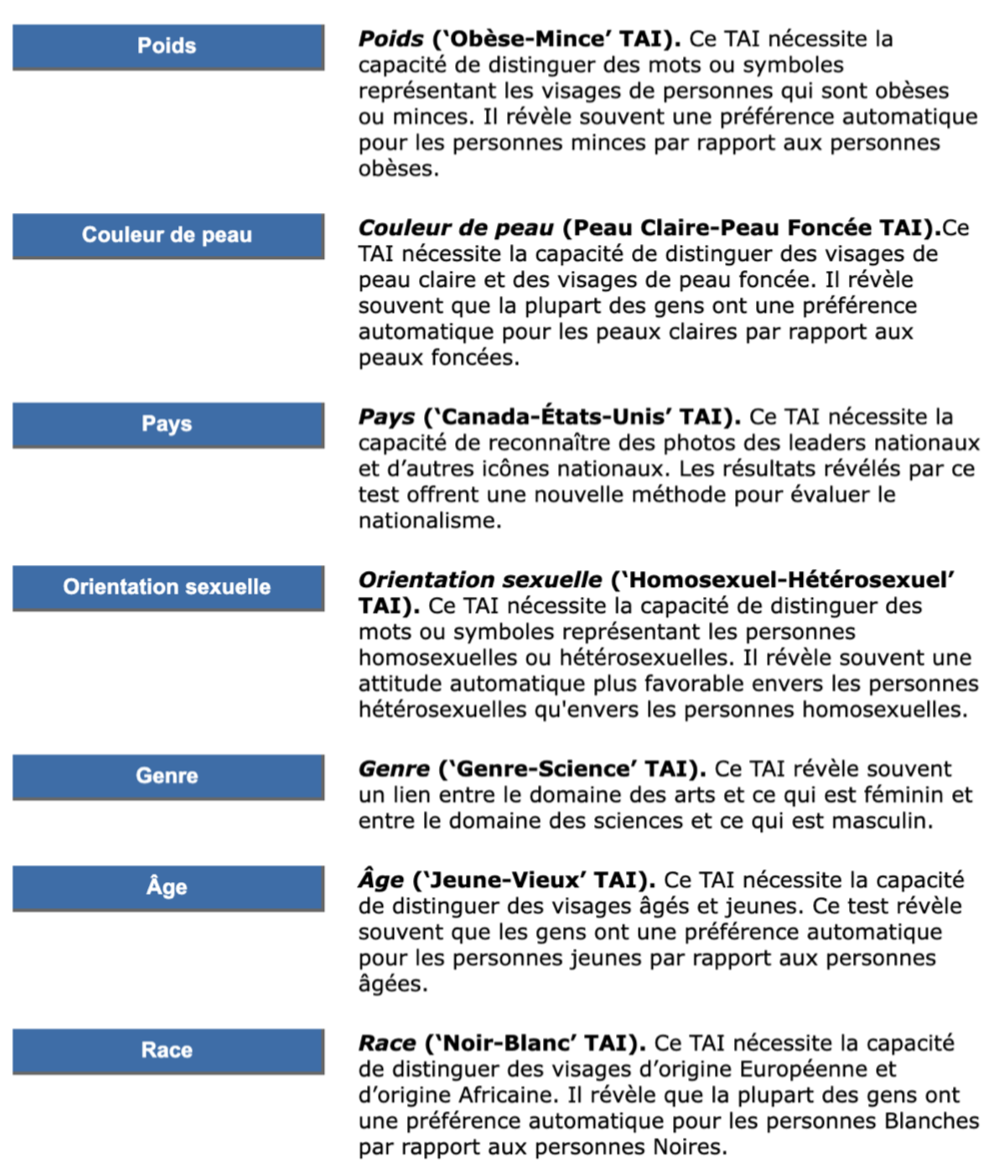
This test is very interesting: it uses both modes of cognitive functioning, System 1 and System 2, described by Amos Tversky and Daniel Kahneman (Nobel Prize in Economics). We won't say more…
- Individualize patients rather than viewing them as belonging to a group.
- Accept control from others by prioritizing cross-checking, performed by a third party, as well as secure communication.
Develop metacognition. This involves developing your own critical thinking by regularly and attentively examining your thoughts: Why do I think this? What sources can I rely on? What would another person think? etc. It is in this spirit that the SafeTeam Academy decided to address this delicate but fundamental topic, which is unfortunately often unknown to healthcare professionals and absent from initial healthcare training programs. Debiasing methods exist (secure communication, cross-checking, team decision-making, etc.) and are presented regularly in our training programs. We were committed to presenting this issue of implicit bias in healthcare because sexist prejudices still exist. In order to combat sexism in healthcare, the SafeTeam Academy recently signed the Women in Healthcare charter.
Femmes de Santé is a collective whose objective is to value and develop the human element at the heart of the healthcare system and to promote the expertise and actions initiated by women in the healthcare sector.
If you found this article interesting, disturbing, or would like to learn more, write to us at the following address: contact@safeteam.academy