
🔷 Présentation
La gestion des urgences en service de médecine et chirurgie nécessite un travail d’équipe de qualité. Cette formation propose donc de revenir sur l’organisation et la communication en situation de crise, à travers une situation concrète.
🔷 Description
Pré-requis :
- Être un professionnel du système de santé
Durée :
- 1 h en autonomie
- 1 h en collectif (débriefing en visioconférence)
Critères de certification HAS :
- Critère 2.2-12 : Les équipes maîtrisent la prise en charge des urgences vitales.
- Critère 3.2-04 : L’établissement forme ses professionnels à la gestion des risques en utilisant des outils de la simulation en santé.
🔷 Points forts
- Interview filmée de Fatma Guandouz, experte en simulation en santé et infirmière de réanimation.
- Format mixte, alliant immersion vidéo, réflexion individuelle et debriefing collectif.
- Cette formation peut être réalisée à la suite de la formation P03 « Transmission et erreur médicamenteuse en service de médecine/chirurgie », pour une immersion plus globale.
🔷 Programme
― Parcours en autonomie (asynchrone)
- Introduction à la formation
- Pré-test (test de positionnement)
- Vidéo-simulation
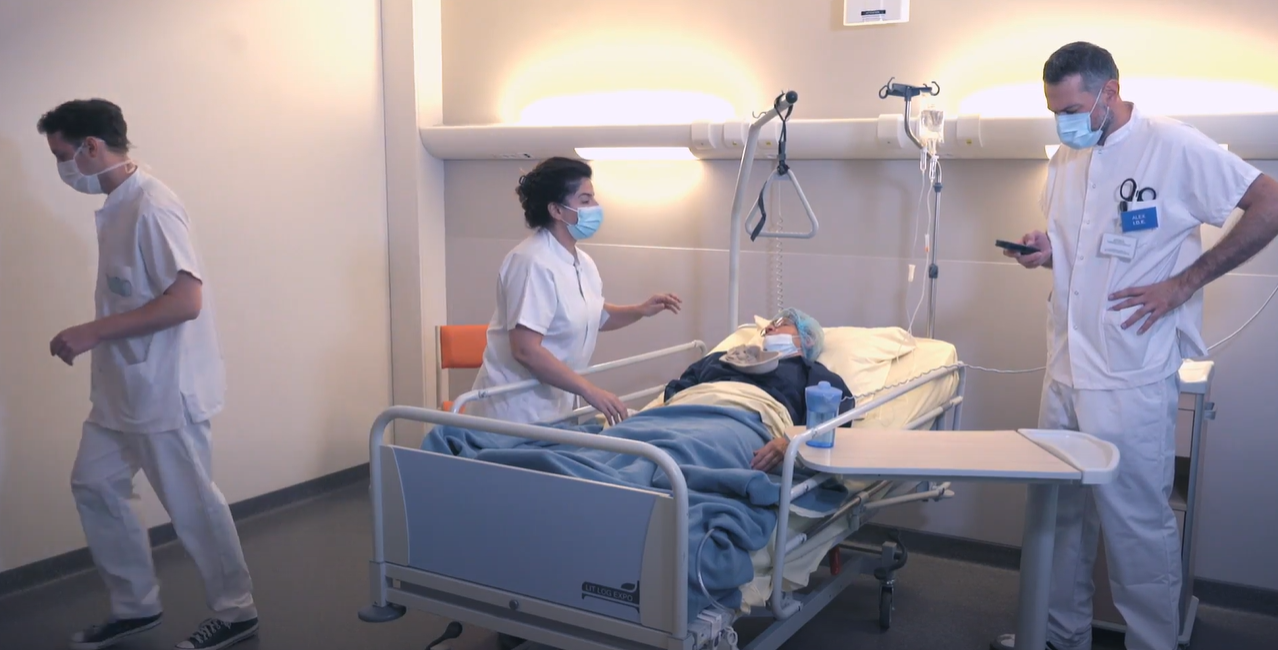
- Vidéo-simulation immersive retraçant la vie d’une équipe pluriprofessionnelle (2 infirmiers, 1 aide-soignant, 1 médecin) de service de médecine/chirurgie, sur la gestion d’une urgence vitale suite à une erreur médicamenteuse. L’immersion commence à l’arrivée de l’équipe paramédicale dans la chambre de la patiente, qui présente un malaise généralisé, avec une désaturation. L’équipe paramédicale doit alors s’organiser pour la gestion de l’urgence. Le médecin rentre en jeu rapidement à la suite d’un appel de l’un des deux infirmiers. L’immersion s’arrête lorsque la patiente est transférée en réanimation.
- Interview filmée : synthèse et analyse de la situation.
- Synthèse des éléments clés à retenir
- Identifier les bonnes pratiques d’organisation et de communication en situation de crise (principe du Crew Resource Management, développé par la NASA et transposé en anesthésie).
- Mise en situation : quelle est la place du leader ?
- Post-test (mesure de la progression et validation des acquis) & Plan d'actions
- Évaluation de la formation
― Débriefing collectif en visioconférence (synchrone - optionnel)
- Débriefing de la vidéo-simulation avec un expert en travail d'équipe
- Identifier les écarts entre sa pratique professionnelle et les bonnes pratiques pour mieux s’organiser et communiquer en situation de crise.
- Identifier ses axes d’amélioration individuels et en équipe.
- Établir un plan d’actions individuel et collectif pour renforcer son travail d’équipe.
◆ Session de formation intra ◆
Tarif par apprenant, applicable dans le cadre d’un groupe de référence de 10 professionnels. Ce tarif donne accès au parcours e-learning pour chaque apprenant. Un débriefing collectif en visioconférence peut être organisé en fin de formation sur demande (optionnel, sur devis).
◆ Licence individuelle ◆
Abonnement annuel nominatif donnant accès à tout le catalogue en autonomie. Les débriefings collectifs sont réservés aux formations intra et disponibles en option pour les groupes.


