In 2022, medical errors were among the top 10 causes of death according to the WHO.* These accidents are partly due to communication breakdowns, information transmission failures, distractions, and task interruptions.*
To improve the reliability of healthcare and optimize patient safety, it is essential to implement reliability practices that take human factors into account. These practices are often inspired by other high-risk industries, such as aviation, which has been teaching its teams the art of cooperation since the 1980s.
Cross-checking, inspired by aviation
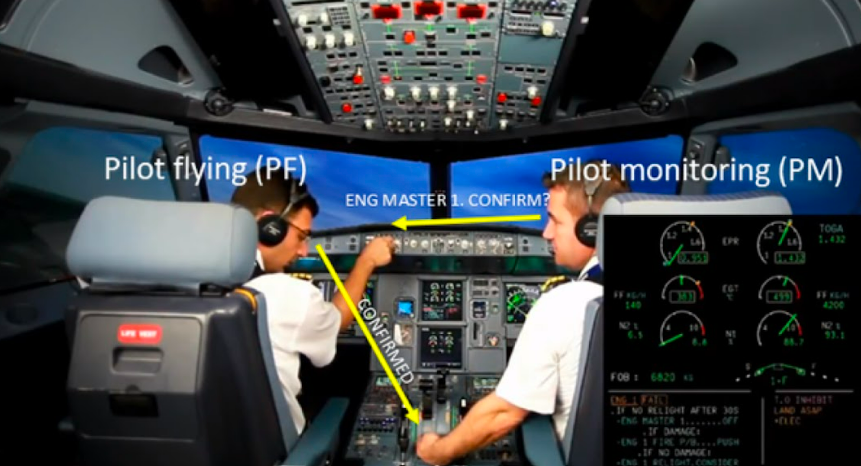
In an airliner, there are always two pilots. One is responsible for the actual piloting; this is the pilot flying. The other checks, monitors, and controls the actions of the first pilot while also handling ancillary tasks; this is the pilot monitoring. He plays a key role, as he must be constantly vigilant to best advise the pilot flying. Both have tasks assigned to them in advance, allowing them to avoid any risks and ensure air safety. This is called cross-checking. It's a kind of mirrored check, a double verification that is part of a risk management approach, serving as a tool for prevention and recovery. Everything is monitored to avoid risks. Cross-checking promotes teamwork. It is essential that pilots communicate with each other and listen to one another. Aviation is a true team effort where each individual has a role to play. It is therefore essential to be able to identify the areas of vulnerability where cross-checking must be mandatory and systematic. Adapting cross-checking to healthcare activities src="https://cdn.prod.website-files.com/61f1c5bbc327ec3679e7457c/62cd97890cbaca5c72eb6c88_Controle%20crois%C3%A9%203.png" width="auto" height="auto" loading="lazy">
As with aviation, it is necessary to identify moments of vulnerability in health. In the context of surgical activity, the WHO has recommended since 2010 the implementation of a surgical checklist where the different phases correspond to areas of vulnerability and where cross-checking is necessary, if not fundamental: Phase 1: Before anesthetic induction, the pause time before anesthesia. Phase 2: Before the surgical procedure, the pause time before the incision. Phase 3: After the surgical procedure, the pause time before leaving the operating room. The surgical checklist is only meaningful if it is carried out by a team, with cross-checking by the various healthcare professionals involved in the patient's care. This tool promotes cross-checking and structures teamwork by providing a status update through briefings and debriefings. The checklist allows for a shared mental framework with clear objectives at each stage of the patient's care pathway. It encourages all stakeholders to discuss the intervention, thus fostering teamwork and communication. Simulation for training healthcare professionals: Simulation is integrated into relevant new teaching methods for training healthcare professionals. It has also long been used in other fields such as aeronautics* and can be seen as a tool for testing one's work environment.
SafeTeam Academy and STAN Institute are training organizations that use simulation-based pedagogy and, based on this pedagogical expertise in simulation, innovate to offer new ways of learning.
STAN Institute uses in-situ experienced simulation to train learners. Drawing on its experience in the aeronautics sector, the STAN Institute team, experts in human factors, safety, and lessons learned, has applied its knowledge to the medical field.
The founders of SafeTeam Academy, for their part, created perceived simulation: like in a movie, learners are immersed in an immersive video during which practices and routines are examined. SafeTeam Academy uses simulation as a tool for improving the reliability of healthcare practices by leveraging a long-established industry in France: cinema. Realism and perceived authenticity are key learning drivers. The tool offered by SafeTeam Academy also reflects a futuristic vision of simulation: developing mobile debriefing teams.
In both cases, these experiential learning tools help analyze practices and acquire new skills within organizations, thus promoting healthcare professional learning.
The e-learning training programs offered by SafeTeam Academy have been designed to be complemented by live simulation.
In this sense, simulation centers like STAN Institute and simulation trainers are true agents of change and work together perfectly to offer the most powerful blended learning experience available today.
If you too would like to participate in improving the reliability of care within your organizations, contact us: contact@safeteam.academy; info@stan-institute.com
* WHO | 10 facts on patient safety. WHO. http://www.who.int/features/factfiles/patient_safety/en/ (accessed 27 Jan 2019).
* Joint Commission Center for Transforming Healthcare releases targeted solutions tool for hand-off communications. Jt Comm Perspect Jt Comm Accreditation Healthc Organ 2012;32:1, 3.
* How to better train and assess medical and health sciences students?, Thierry Pelaccia, Foreword by Jacques Tardif